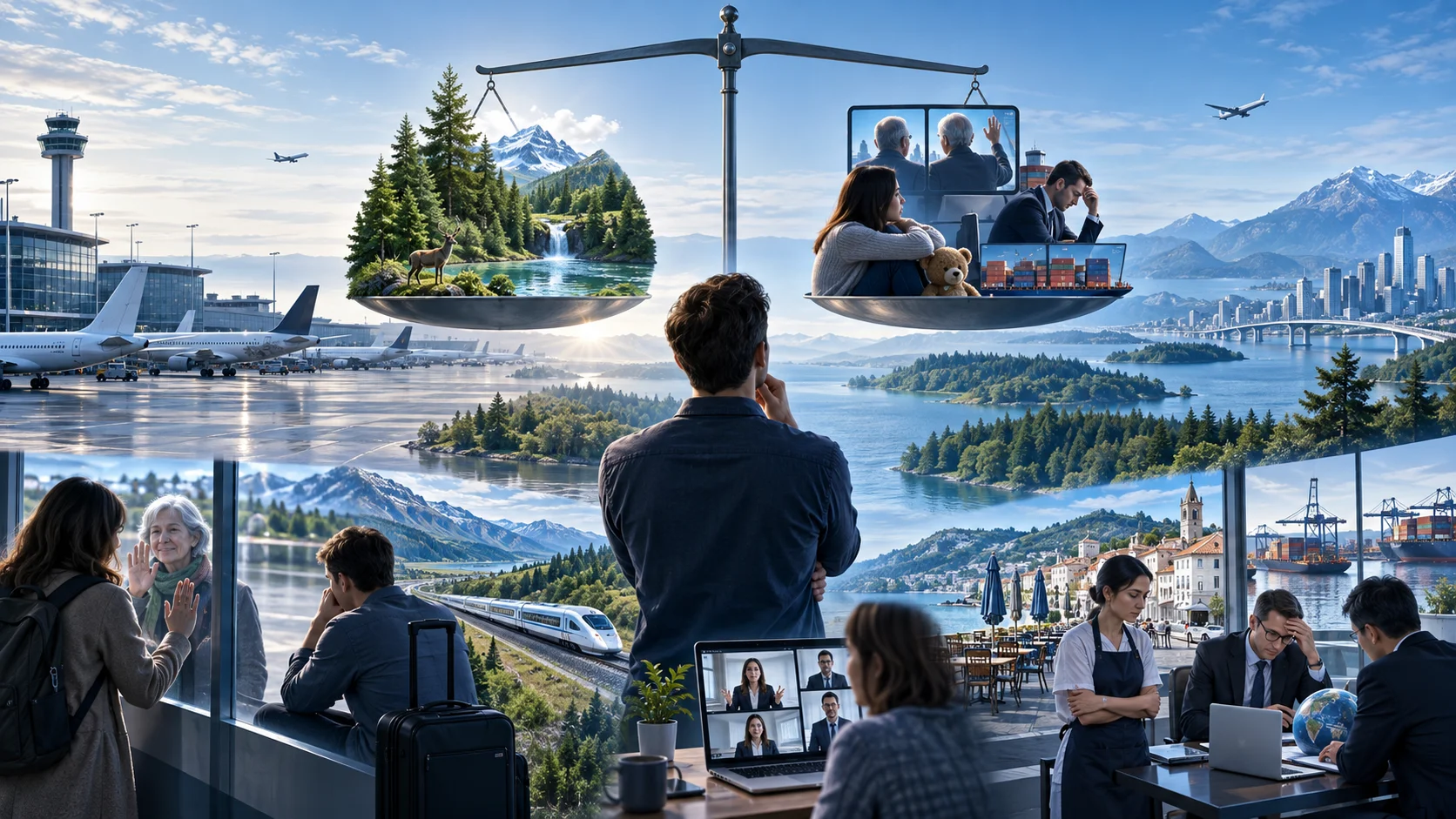
In recent years, many people have voluntarily reduced the number of flights they take or stopped flying altogether to protect the environment. Although this trend presents challenges for individuals and businesses, I believe that the environmental benefits outweigh the disadvantages.
This behavioral shift strengthens environmental protection on several interconnected fronts. Reducing flight frequency immediately lowers emissions from one of the most carbon-intensive forms of transport; in fact, a single long-haul journey can exceed an individual’s annual carbon footprint. As air travel becomes less central to people’s routines, political and commercial incentives also begin to shift, directing greater investment toward sustainable alternatives such as high-speed rail, electric aviation, and low-carbon fuels. Beyond these structural effects, voluntarily flying less carries symbolic weight. When individuals change their habits for environmental reasons, it raises public awareness and creates social pressure for stronger climate policies, prompting governments and businesses to align with climate responsibility.
However, reduced air travel does create practical and economic drawbacks. Lower air travel demand may limit people’s ability to visit family, pursue international education, or attend professional events, particularly in regions with limited alternative transportation options. The economic impact is also considerable. Aviation, tourism, and hospitality industries rely heavily on air travel, and a decline in passenger numbers could lead to business closures and job losses.
Despite these challenges, the long-term environmental advantages are far more substantial. Climate stability is a prerequisite for economic security, public health, and social well-being, whereas mobility and tourism can adapt to new technologies and policies. For this reason, I believe that the environmental gains from reduced flying outweigh the disadvantages for individuals and businesses.