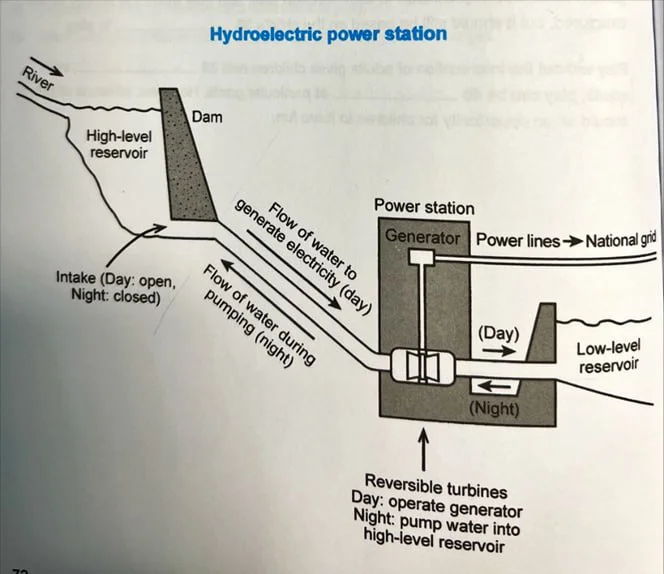
The diagram shows how a hydroelectric power station generates electricity. Overall, this operation combines nature and engineering, and electricity is produced through two distinct yet harmonious processes. During the day, the mechanism harnesses water current from higher ground to generate sustainable electricity, and at night, the water is pumped back from the lower ground for reuse.
As the sun rises, the water stored behind the dam flows from its higher ground through the intake valve positioned under the dam (open only during the day) into a pipe to arrive inside the power station. The current of water propels the reversible turbine into action. This, in turn, drives the generator to convert mechanical energy into electricity delivered to the national grid through powerlines.
At night, the reversible turbine pumps the water stored in the low-level reservoir back to the high-level reservoir, the designated area behind the dam where water from the river is collected. The pumped water passes through the intake valve, which is closed at night to prevent water from moving downward toward the power station and maintain the equilibrium between the daily and nightly processes.