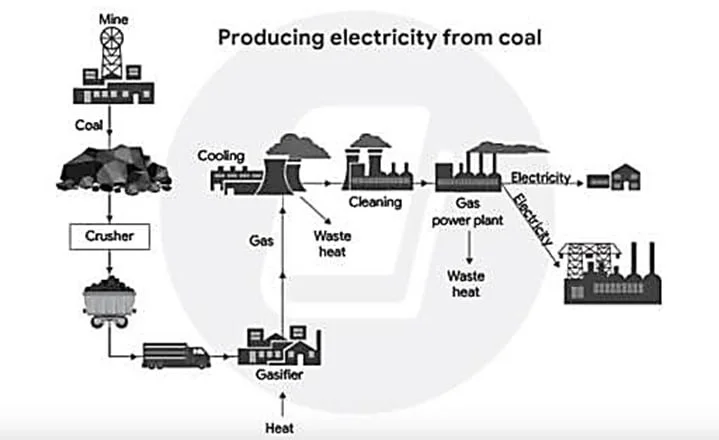
The diagram shows the linear process through which one type of coal is transformed into electricity. Overall, the system combines natural resources with engineering-based operations, moving coal through multiple facilities where it is mechanically processed, chemically converted, and eventually used as fuel in a gas power plant. Throughout the process, waste heat is produced as a by-product, while the final output supplies both residential and industrial users.
The sequence begins with coal being mined and fed into a crusher, which breaks it into smaller fragments. These crushed particles are then loaded onto trucks and transported to a gasifier, marking a transition from the preparation stage to the conversion phase.
Inside the gasifier, heat is applied directly to the coal, initiating a transformation that produces gas. This gas is next directed to a cooling unit, where its temperature is reduced, releasing waste heat. Following this, the gas undergoes a cleaning stage in which impurities are removed. Once purified, it is sent to a gas-powered electricity plant. Here, the clean gas is combusted to generate electricity, and the waste heat is emitted again as an unavoidable by-product. The electricity produced at this final stage is then distributed to both homes and factories.