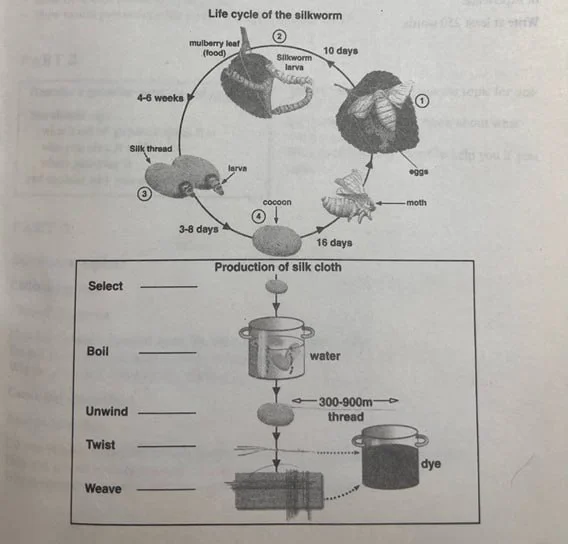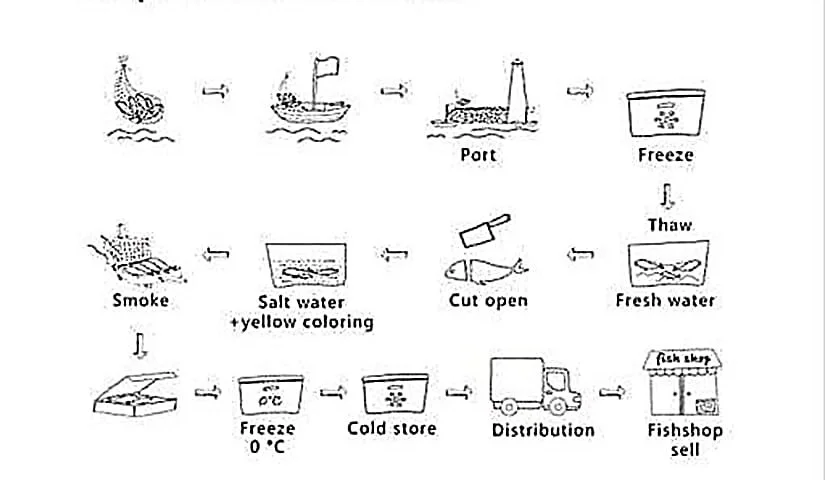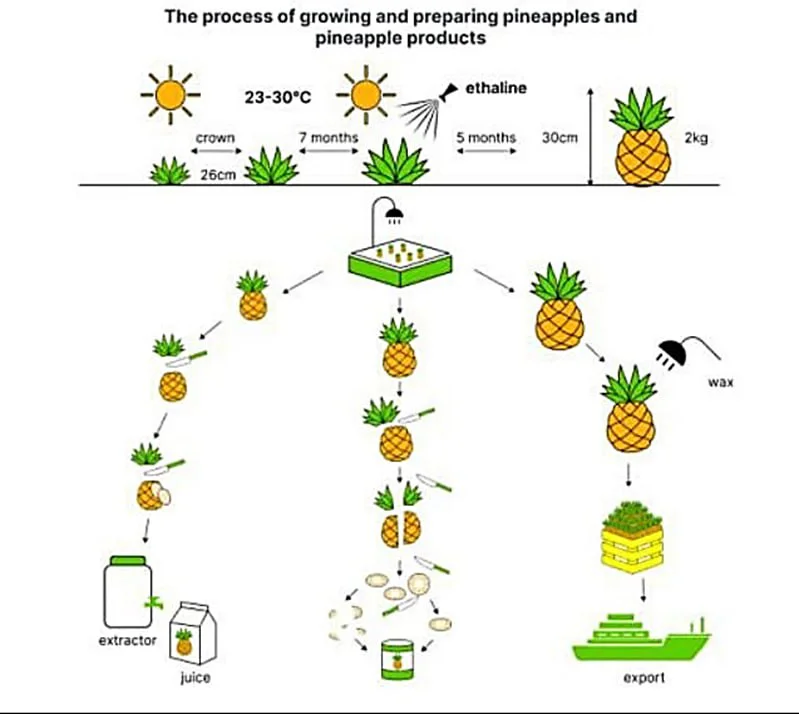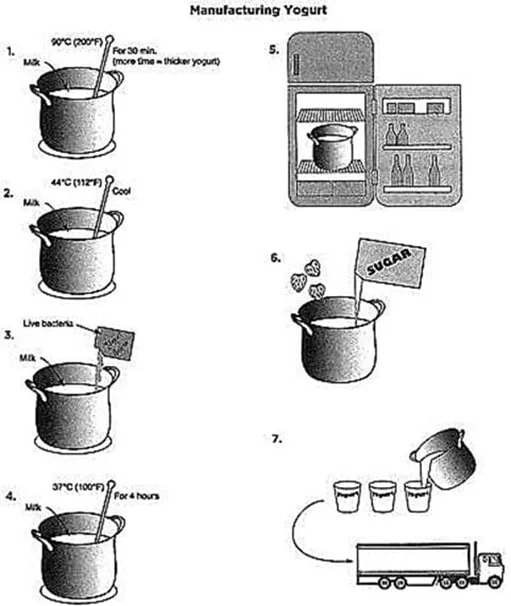
The diagrams illustrate silkworms’ life cycle and the steps to produce silk cloth. Overall, the cyclic life of silkworm consists of four stages: eggs, larvae, silk thread spinning, and cocooning. This natural process is interrupted by a linear method to produce silk, which begins by selecting cocoons to be boiled and unwound for their silk threads.
The cyclic life of silkworms begins with moths laying eggs, which hatch after a 10-day period for silkworm larvae to emerge. They feed on mulberry leaves for 4 to 6 weeks before they begin spinning silk thread for about 3-8 days to encase themselves in cocoons. Sixteen days later, a metamorphosis occurs, and a moth emerges from the cocoon to restart the process.
Before the metamorphosis stage, cocoons are selected for silk production. They are first boiled in water, resulting in the silk threat's unwinding, which spans 300-900 meters. The threads are then twisted to form thicker lines, and they are either directly dyed or woven into fabrics to be dyed later.