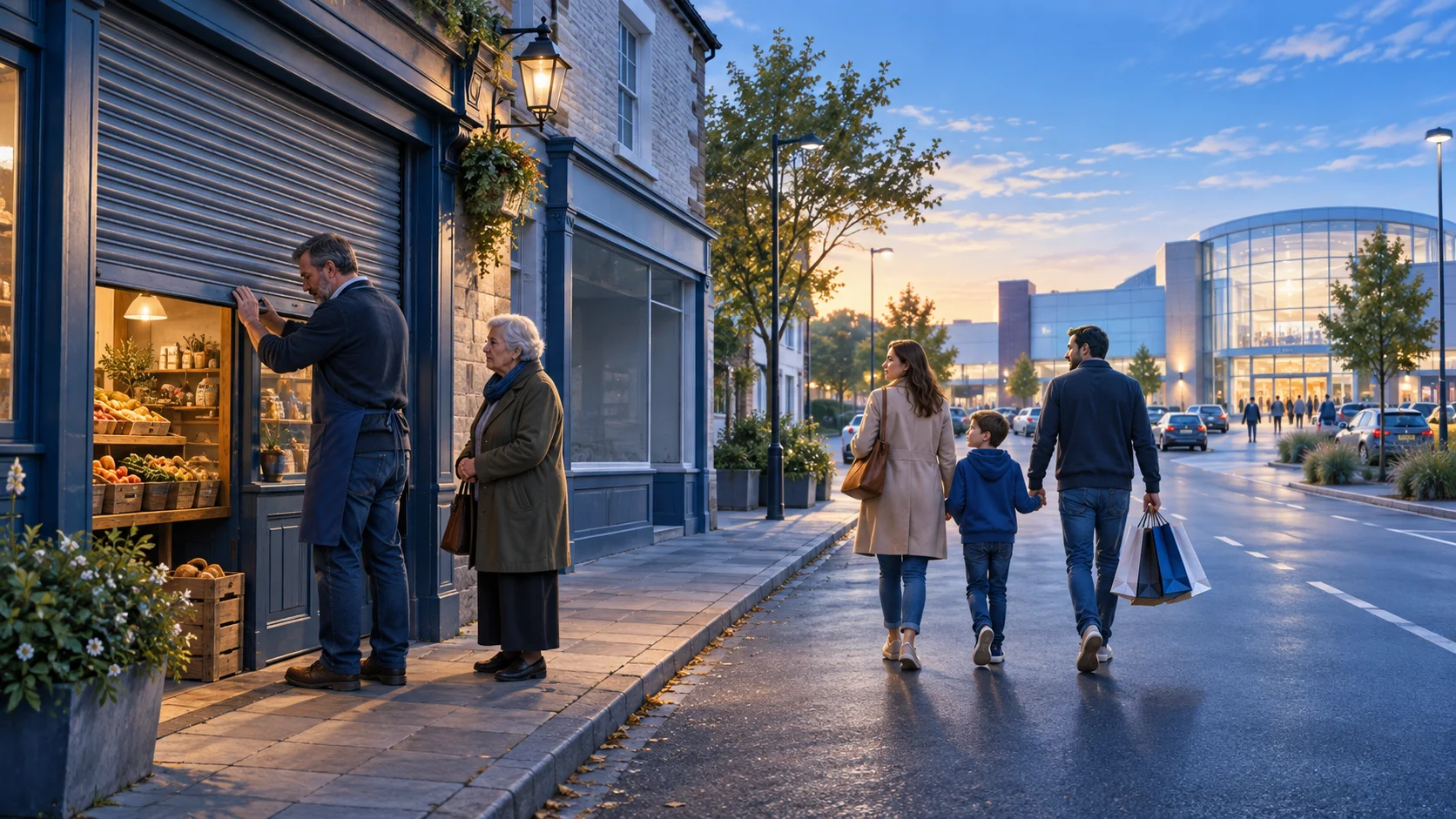
The world’s shopping landscape is evolving. This shift has driven many local businesses to face closures, as today's shoppers often prefer to visit large shopping centers or malls. I think whether this shift is positive or negative is too controversial.
This development aligns better with people's current needs. Unlike in the past, when people had time to visit multiple shops on various streets —an experience that was enjoyable in itself —today, many find it more efficient to engage in one-stop shopping at a centralized location that offers a variety of products, services, and amenities, thus saving time and energy. An additional benefit is the better distribution of traffic. Many large shopping complexes are strategically located away from city centers, allowing customers to avoid navigating congested streets frequently while searching for specific shops and parking spaces.
However, a negative consequence of this development is a reduction in social cohesion. In the past, locals frequently gathered in small neighborhood shops to discuss their lives and current affairs, which often motivated community members to take action to address issues like funding a good cause. This contrasts sharply with the fewer social interactions in neighborhoods today. Another issue is that the once-bustling neighborhoods have become less safe. With small shops dispersed throughout the area, communities enjoyed increased foot traffic on every avenue and alley, which deterred criminal activities that often occur in less crowded areas of urban centers, such as burglary.
These discussions suggest that whether the closure of small shops today due to the dominance of shopping centers represents a positive development is highly controversial. That is why we should avoid a simplistic answer, because although this shift better aligns with the modern shopping and commuting needs of shoppers, it remains uncertain how authorities can mitigate the decline of social cohesion, even though our neighborhoods can be better policed for higher safety.