
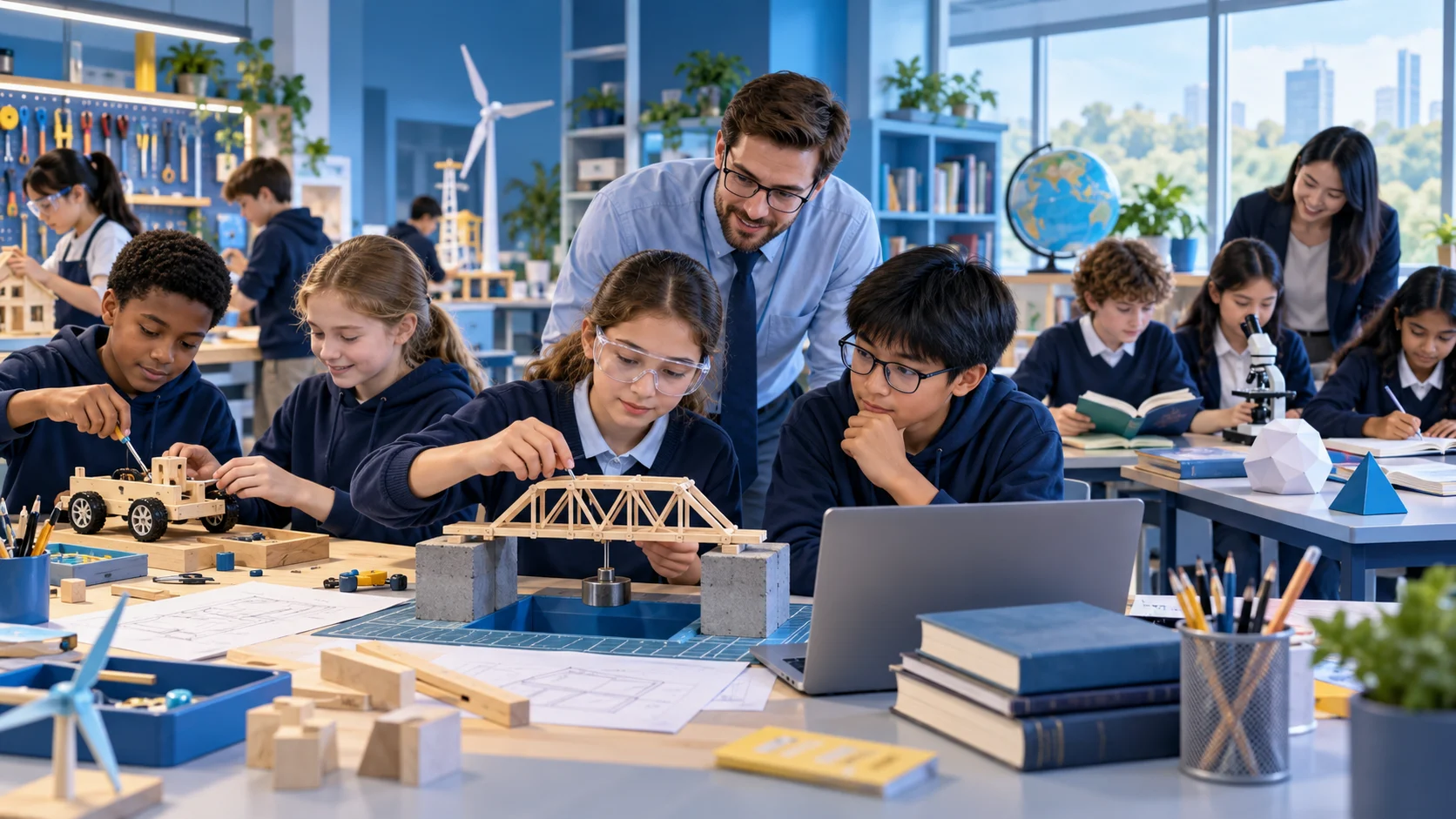
In modern education, there is a debate about what children should focus on in school. Some believe students should learn how to make and design things, while others argue that they should prioritize more beneficial lessons. I will argue that both views have merit, but neither is complete on its own.
Learning practical skills helps children understand how the real world works. Designing and making things fosters creativity, problem-solving, and independent thinking, which are difficult to develop through textbooks alone. When children work with materials and tools, they learn how ideas become outcomes and how failure leads to improvement. These experiences can also increase motivation. Not all students are naturally inclined toward purely academic subjects, and they often struggle with such lessons, leading to demotivation. This problem can be addressed by incorporating craft and design into the school curriculum.
However, for many children, especially those from disadvantaged backgrounds, academic subjects may be the only means of ensuring a fulfilling life. Academic skills open doors to higher education and stable employment, and since school time is limited and precious, subjects such as mathematics, literacy, and science should take priority. In addition, there is the issue of feasibility in implementing this plan. Not all schools have the resources or trained teachers to offer meaningful design education, resulting in poor-quality instruction in non-academic subjects.
These considerations suggest that if schools focus only on practical skills, students may lack the academic foundation needed for future opportunities. If they focus only on academic learning, creativity and real-world understanding may suffer. A balanced approach is therefore necessary. Schools should protect core academic subjects while integrating design and making activities in a realistic and inclusive way for those interested in non-academic subjects.