
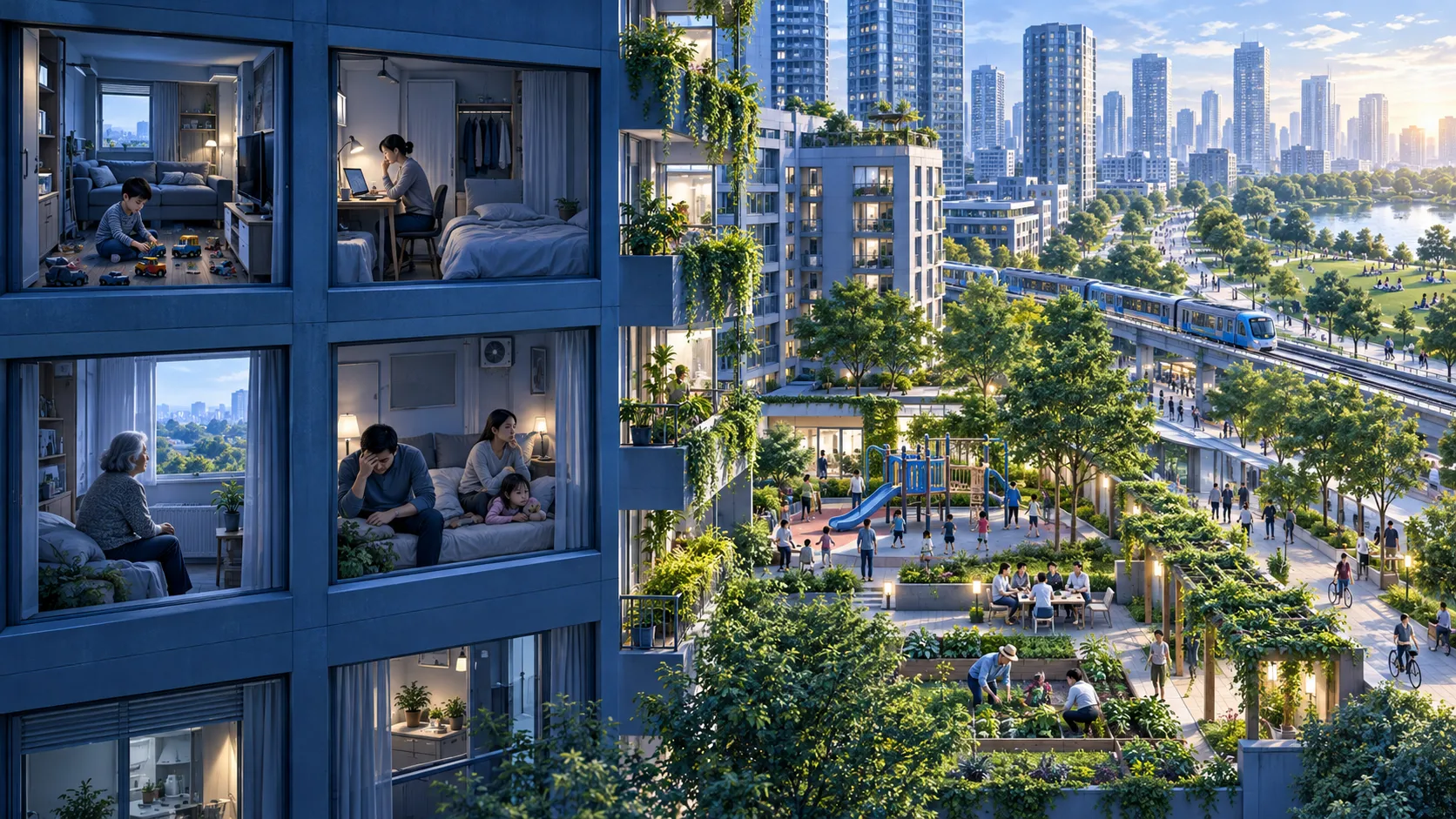
Urban living has undergone significant changes as cities expand and populations rise. One noticeable shift is the increasing number of homes that offer little or no private outdoor space, such as gardens or balconies. While this trend reflects practical responses to urban growth, I believe it is generally a negative development.
One argument in favor of homes with limited outdoor space concerns land use and environmental protection. As cities expand, the provision of large private gardens for every household often leads to urban sprawl and the destruction of surrounding natural habitats. Reducing private outdoor space enables cities to expand inward rather than outward, thereby preserving green areas beyond city limits. In addition, allocating less land to individual yards can make urban infrastructure more efficient and, in some cases, ease housing pressure. By prioritizing shared spaces and compact layouts over private outdoor areas, cities may accommodate growing populations while limiting environmental damage.
Despite these benefits, the negative effects are more significant. A lack of outdoor space can undermine physical health. Without easy access to sunlight and private areas for exercise, residents may become more sedentary, increasing their risk of chronic illness. The psychological effects are also concerning. Humans evolved in close connection with natural environments, and prolonged confinement in enclosed spaces can contribute to anxiety, irritability, and depressive symptoms. Children are particularly vulnerable. With urban streets becoming less safe for unsupervised play, an outdoor area at home often serves as the only secure space for physical activity. Without it, children default to indoor entertainment and develop habits of inactivity.
These considerations suggest that while compact housing may help preserve land and improve affordability, it also threatens physical well-being, mental health, and healthy childhood development. For these reasons, I believe that the trend toward homes with limited or no outdoor areas is, on balance, a negative development.