
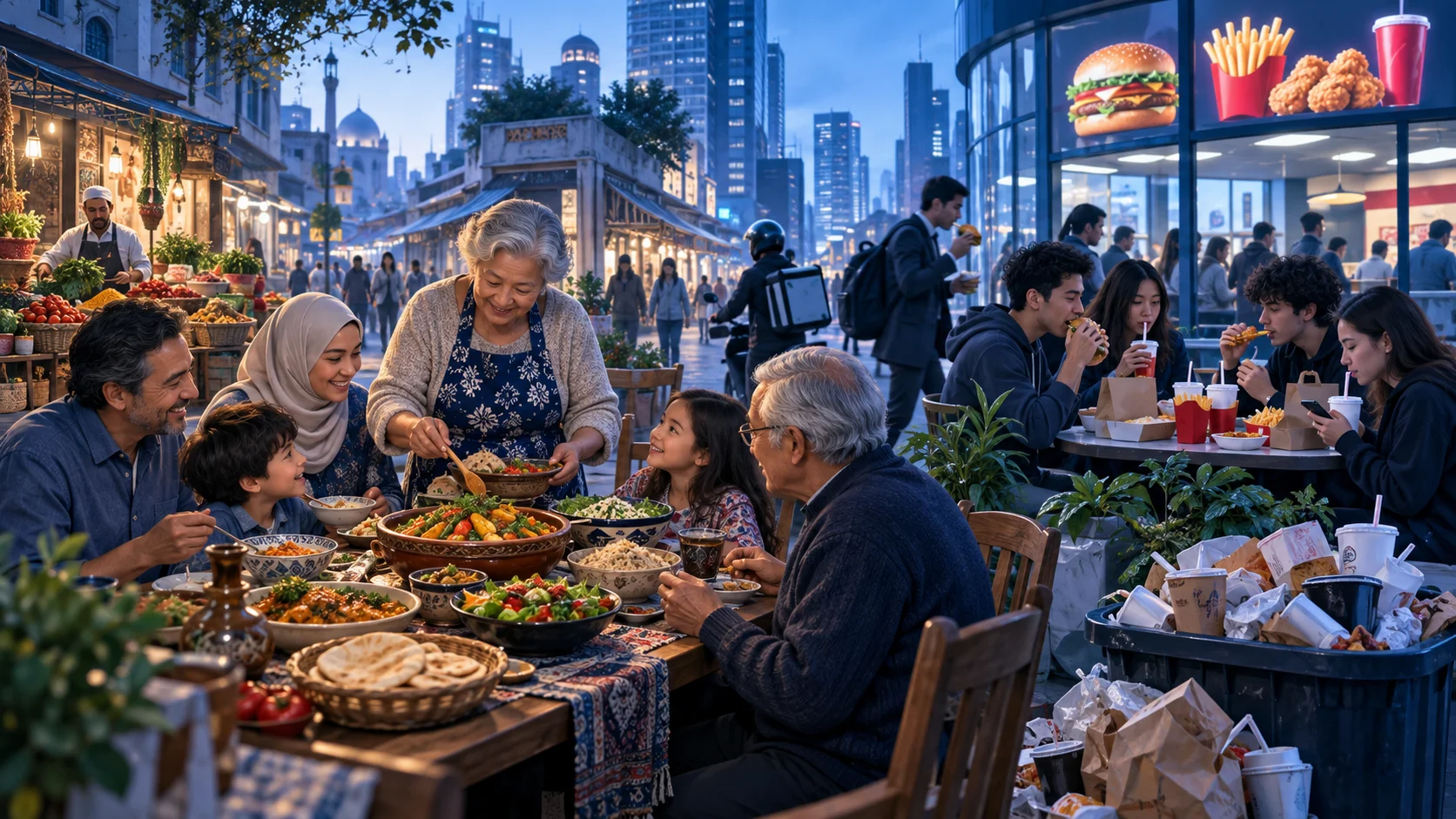
A lot has changed in the modern world, and food is no exception. In many countries, traditional foods are gradually being replaced by international fast foods, and many people believe this change harms families and society. This concern is reasonable, but it does not show the full picture.
This argument makes sense because traditional meals once played an important role in family life. Preparing food at home encouraged family members to spend time together, share responsibilities, and communicate. In contrast, fast food promotes speed and convenience, often reducing shared family time. In addition, the spread of fast food has clear health consequences. Problems such as obesity and diabetes are becoming more common, placing pressure on healthcare systems and reducing overall social wellbeing. From this angle, criticism of fast food is not simply about culture, but about real social and health costs.
However, this view ignores the realities of modern life. It assumes that all families still have sufficient time and energy to cook traditional meals, which is no longer the case for many people. In large cities, long working hours and financial stress make fast food a practical choice rather than a careless one. This argument also overlooks the fact that food cultures naturally change. Throughout history, cuisines have developed through contact with other cultures, and international food does not always replace local traditions. In many cases, both coexist, serving different needs.
If societies treat the replacement of traditional meals with fast food as a complete threat, they risk idealizing traditions that many people cannot realistically maintain. On the other hand, accepting this trend without due consideration may harm public health and cultural practices. A better attitude is to balance: Governments should support affordable traditional food while helping families make healthier and more informed choices, rather than resorting to moral panic.