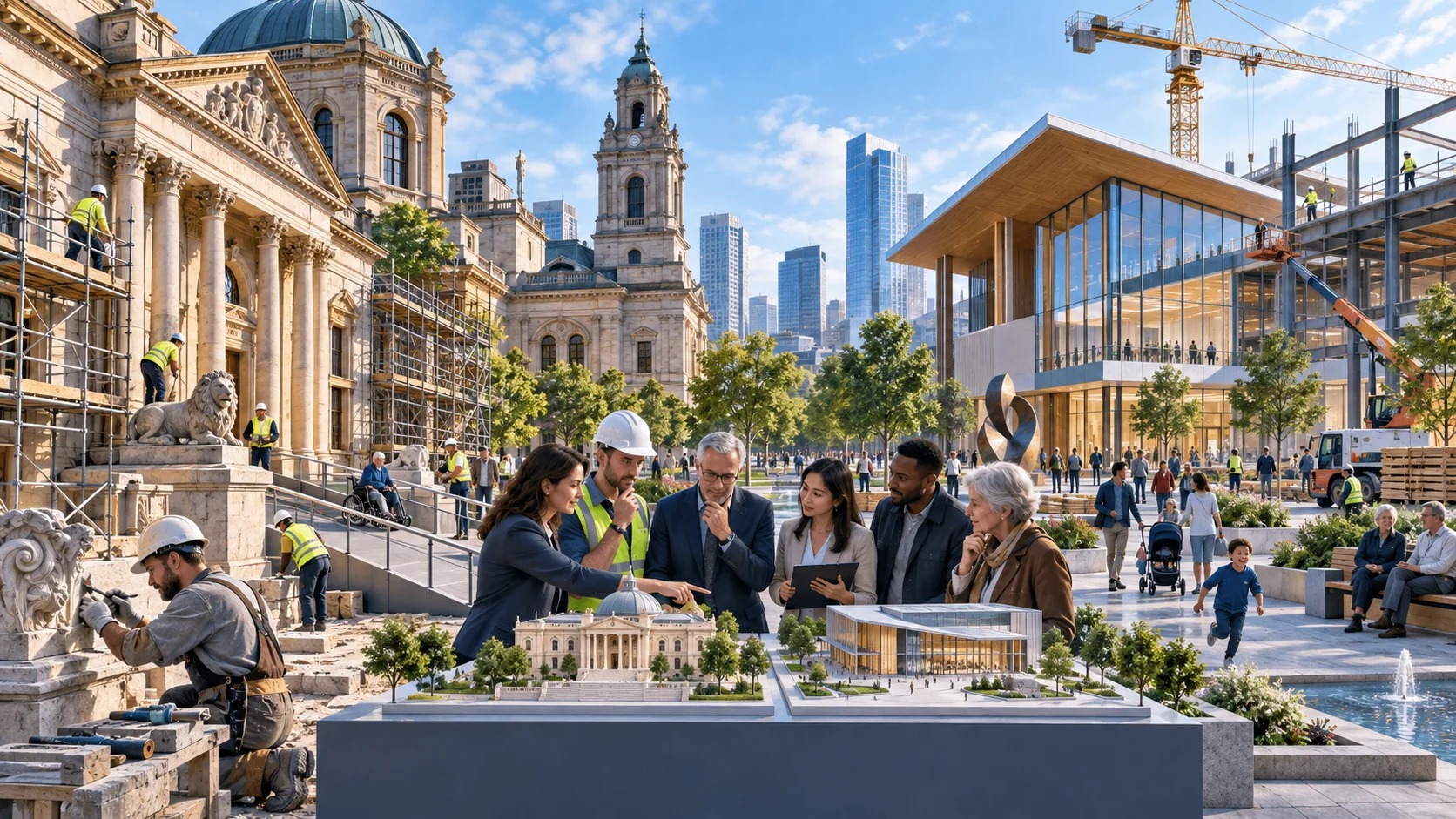
Budget allocation is a central responsibility of governments, and one proposal is to invest in the construction of new public spaces, such as museums and town halls, rather than renovating older structures. While this idea has some merit, it requires a more balanced evaluation.
New public buildings can strengthen a country’s soft power. Nations seeking to increase tourism or elevate their cultural profile often rely on modern architectural landmarks that attract visitors and signal progress. In addition, the shift toward environmentally sustainable infrastructure has made new construction appealing. Many older buildings are energy-inefficient, whereas new public facilities can be designed with low-carbon materials, efficient insulation, and renewable-energy systems, making them models for green development.
However, prioritizing new buildings raises several concerns. One is the risk of cultural discontinuity. Historic structures carry architectural, artistic, and historical value, and abandoning them in favor of modern designs can weaken a community’s sense of identity. Another issue is fiscal practicality. Constructing new public spaces demands far larger budgets, while renovation often achieves similar functional goals at a fraction of the cost. For many countries, especially those with limited public finances, restoration is the more responsible strategy.
These considerations suggest that while new public buildings can enhance national image and sustainability, exclusive reliance on this approach may undermine cultural heritage and strain public budgets. Therefore, investment decisions should be context-dependent, balancing cultural significance, economic capacity, and environmental priorities to serve society's long-term interests.