
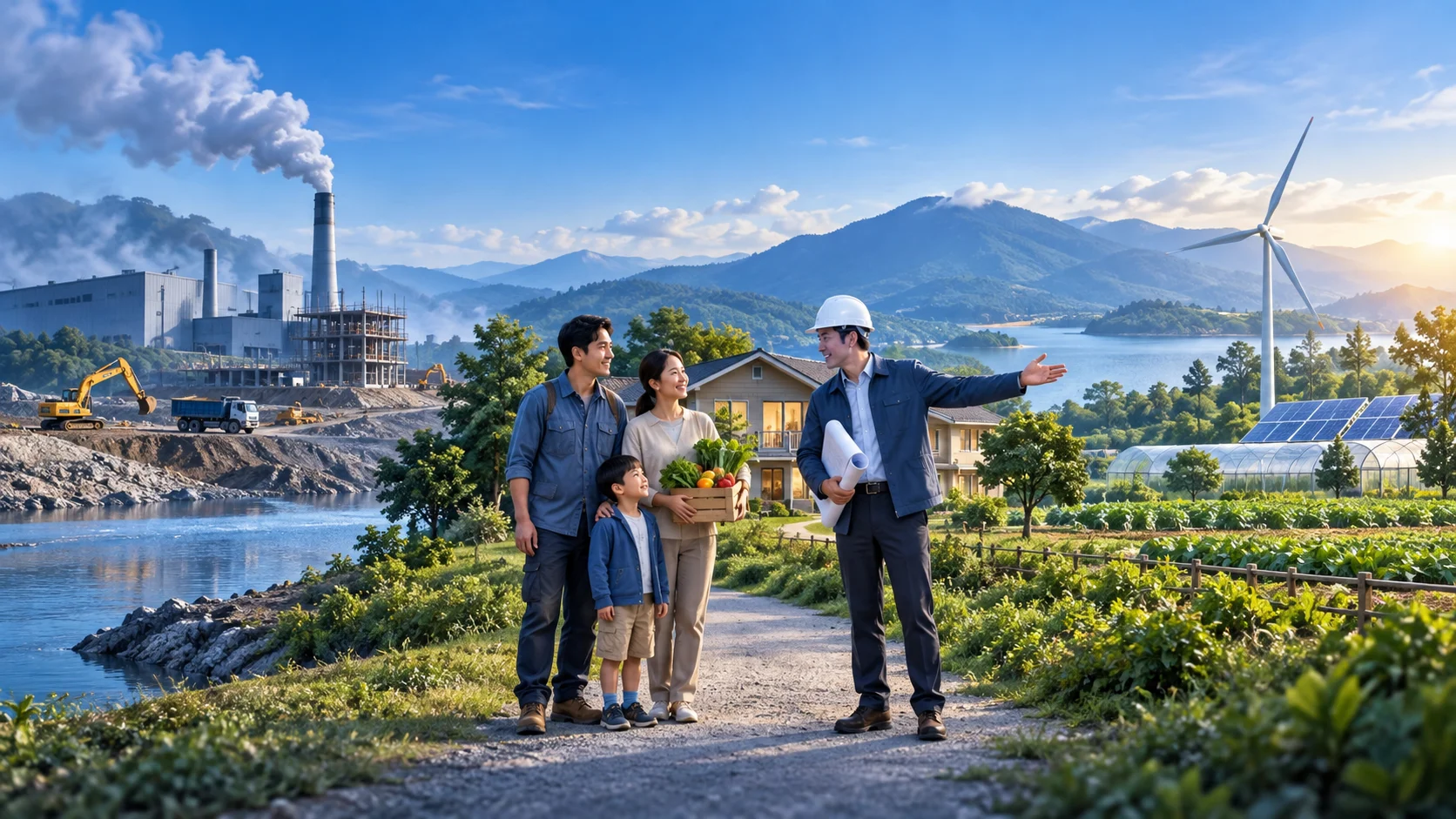
Economic growth and its impacts have been widely debated. Some people believe it is the only solution to the problems of hunger and poverty, whereas others argue that it should be terminated due to its adverse effects on the environment. I believe that both camps can be reconciled to achieve a more effective approach.
Without economic growth, there will be no job creation. Growth expands industries, which, in turn, require a workforce to operate, improving employment rates and reducing poverty. An unhealthy economy can also hinder global trade. Without growth, foreign investors will have no incentive to invest, which halts the transfer of technology necessary for infrastructure development, such as machinery needed for modern agriculture and food security.
However, unchecked economic growth can cause irreversible ecological damage. With the expansion of industries, more and more natural habitats of various flora and fauna will disappear, causing the extinction and disruption of food chains, whose negative effects will lead to increased poverty and hunger in the long run. More importantly, infinite economic growth is not possible given the limited availability of natural resources. Mathematically, something finite cannot remain infinitely productive, suggesting that unregulated progress of the economy will one day stop because there will be no natural resources available for it as fuel and for us to survive.
These discussions suggest that if we prioritize economic progress, we can overcome hunger and poverty through facilitated job creation and strengthened global relationships. The fact, however, is that this mentality will also destroy the environment beyond repair and deplete our resources, leading to more hunger and poverty. Therefore, the aim should be to balance prosperity with planetary protection, such as green energies, technology, and science.